
Senate Republicans Advance Budget Resolution to Fund Immigration Enforcement, Bypass Democrats
Senate Republicans pass a budget resolution to boost funding for ICE and Border Patrol, aiming to end the DHS shutdown while bypassing Democratic opposition.

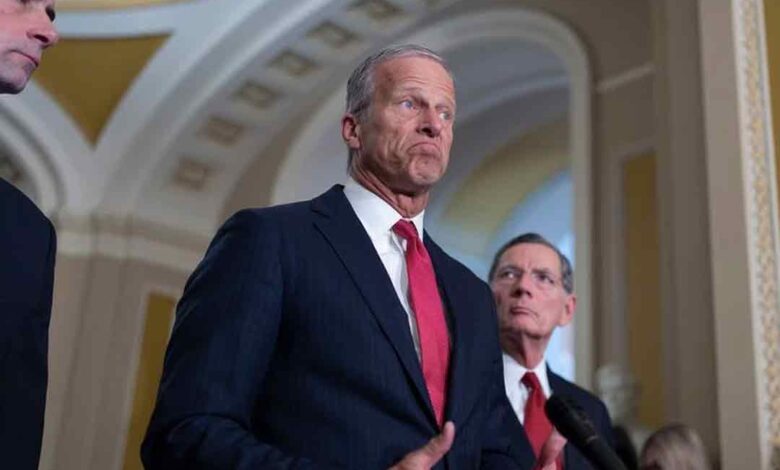
Senate GOP Moves Forward With Budget Plan Amid Political Standoff
Senate Republicans have taken a major step toward advancing a controversial budget resolution aimed at significantly increasing funding for U.S. immigration enforcement agencies. The move is part of a broader strategy to break a months-long deadlock with Democrats and restore full operations at the Department of Homeland Security (DHS).
The Senate narrowly approved the budget framework in a 50–48 vote, highlighting deep partisan divisions over immigration policy and federal spending priorities.
What the Budget Resolution Includes
The Republican-led proposal outlines up to $70 billion in additional funding for agencies such as Immigration and Customs Enforcement (ICE) and Customs and Border Protection (CBP). The funding is intended to support operations for the next several years, potentially through the remainder of former President Donald Trump’s term ending in 2029.
This budget resolution is not a law itself but serves as a blueprint directing congressional committees to draft detailed legislation. It is a critical first step in the budget reconciliation process, which allows lawmakers to pass fiscal legislation with a simple majority in the Senate.
Why Republicans Are Using Budget Reconciliation
Republicans are turning to budget reconciliation to bypass the Senate’s usual 60-vote threshold required to pass most legislation. With only a narrow majority in the chamber, this strategy allows them to move forward without Democratic support.
The reconciliation process is typically used for tax and spending measures and has become a key legislative tool in highly polarized political environments.
By adopting this approach, Senate Republicans aim to secure funding for immigration enforcement even as negotiations with Democrats have collapsed.
DHS Shutdown Drives Urgency
The push for the budget resolution comes amid a prolonged partial shutdown of the Department of Homeland Security, which has lasted since mid-February due to disagreements over immigration enforcement policies.
Republican leaders argue that the additional funding is essential to ensure border security and maintain law enforcement operations. Senate Majority Leader John Thune emphasized that the plan would “unlock funding” for border security efforts over the coming years.
Democratic Opposition and Key Concerns
Democrats have strongly opposed the proposal, criticizing it for increasing funding without implementing stricter oversight measures for federal immigration agents.
Their concerns intensified after several controversial incidents involving enforcement actions earlier this year. Democratic lawmakers have pushed for reforms such as requiring warrants for certain operations and imposing stricter accountability standards.
However, negotiations between the two parties failed to produce a compromise, leading Republicans to proceed unilaterally.
Amendments and “Vote-a-Rama” Drama
The Senate debate included a marathon amendment session known as a “vote-a-rama,” during which Democrats introduced multiple proposals addressing issues like healthcare costs, childcare, and inflation.
Despite some bipartisan support for certain amendments, most were ultimately rejected, underscoring the partisan divide.
What Happens Next?
The budget resolution now heads to the House of Representatives, where its future remains uncertain. If approved, congressional committees will draft a final reconciliation bill detailing how the funds will be allocated.
Both chambers must pass the final legislation before it can be signed into law. Lawmakers face tight deadlines, with Republican leaders aiming to complete the process in the coming weeks.
Political and Economic Implications
The outcome of this budget battle could have far-reaching consequences:
- Immigration Policy: Increased funding could expand enforcement operations nationwide.
- Federal Spending: The proposal may add significantly to the federal deficit if not offset by spending cuts.
- 2026 Elections: The issue is expected to become a major campaign topic, with both parties framing it as a defining policy battle.
The Senate Republicans’ budget resolution marks a pivotal moment in the ongoing fight over immigration policy and federal funding. By leveraging budget reconciliation, GOP lawmakers are attempting to bypass Democratic opposition and push forward a major funding increase for border enforcement.
As the proposal moves to the House, the coming weeks will determine whether this strategy succeeds—or whether the political standoff continues to delay critical government operations.