
Philippines Earthquake 2026: Powerful 7.8-Magnitude Quake Kills 15+, Triggers Tsunami Warnings
A powerful 7.8-magnitude earthquake struck the Philippines on June 8, 2026, killing at least 15 people, injuring hundreds, damaging buildings, and triggering tsunami warnings across Asia.

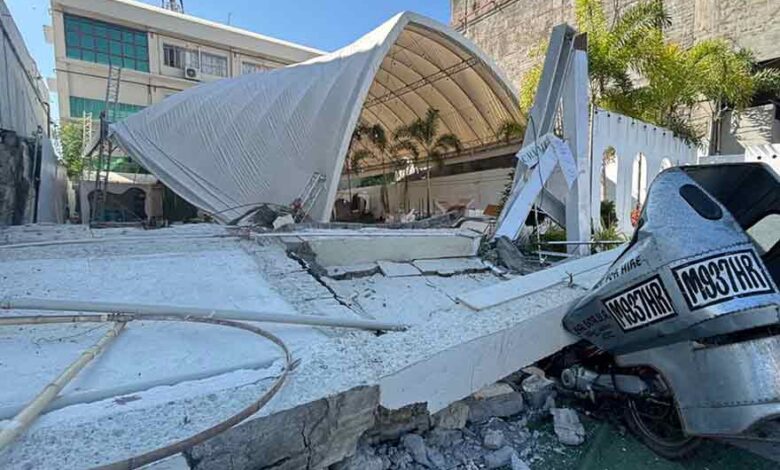
Philippines Earthquake 2026: Death Toll Rises After Powerful 7.8-Magnitude Quake Strikes Mindanao
A devastating 7.8-magnitude earthquake struck the southern Philippines on June 8, 2026, leaving a trail of destruction across several provinces and raising fears of a growing humanitarian crisis. The powerful tremor, centered near General Santos City on the island of Mindanao, caused widespread building collapses, infrastructure damage, injuries, and multiple fatalities. Rescue teams continue to search through damaged structures as authorities assess the full extent of the disaster.
Powerful Earthquake Jolts Southern Philippines
The earthquake struck early Monday morning, shaking large portions of Mindanao and sending residents rushing out of homes, schools, and workplaces. According to Philippine seismic authorities, the quake originated offshore near the southern coast of Mindanao and was felt across numerous provinces. Strong tremors were also reported in neighboring countries, including Indonesia and Malaysia.
Witnesses described scenes of panic as buildings swayed violently and people scrambled to find safety. Several structures suffered severe damage, including schools, commercial establishments, and residential buildings. Emergency officials immediately launched rescue and relief operations in the hardest-hit communities.
Death Toll Continues to Rise
Initial reports indicated only a handful of casualties, but as emergency crews reached affected areas, the number of confirmed deaths increased significantly. Authorities have reported at least 15 to 16 fatalities, while more than 200 people have been injured. Officials caution that the final death toll could rise further as rescue efforts continue and remote areas are assessed.
Many victims were reportedly killed by falling debris, collapsing walls, and damaged infrastructure. Several people remain unaccounted for, and rescuers are working around the clock to locate survivors trapped beneath rubble.
Schools Among the Worst-Hit Locations
The earthquake struck on the first day of the new school term in many parts of the Philippines, creating frightening scenes at schools across Mindanao. Videos circulating online showed students and teachers attempting to protect themselves as buildings shook violently.
At one school, part of a structure reportedly collapsed during a morning assembly, forcing students to flee for safety. Emergency responders and volunteers were dispatched to educational institutions to provide assistance and psychological support for affected children and staff.
In response to the disaster, Philippine President Ferdinand Marcos Jr. ordered the suspension of classes in affected regions while authorities conduct safety inspections of school facilities.
Buildings Collapse Across Mindanao
General Santos City, one of the largest urban centers in southern Philippines, experienced some of the most severe damage. Videos and images from the city showed partially collapsed buildings, damaged commercial complexes, shattered windows, and debris-covered streets.
Several residential neighborhoods also reported structural failures, prompting evacuation orders. Authorities warned residents not to return to damaged buildings because of the continued threat posed by strong aftershocks.
Power outages and communication disruptions were reported in multiple locations, complicating rescue and recovery efforts. Government agencies and emergency teams are working to restore essential services while providing temporary shelter to displaced families.
Tsunami Warnings Triggered Across Asia
Following the earthquake, tsunami alerts were issued for parts of the Philippines and neighboring countries. Authorities warned coastal communities to move to higher ground as a precaution.
Emergency agencies in Indonesia, Malaysia, Japan, and several Pacific regions closely monitored sea levels after the quake. Although the most severe tsunami fears eventually subsided, officials continued to urge caution as conditions remained unpredictable during the hours following the disaster.
Reports later indicated that some coastal areas experienced smaller tsunami waves, but major catastrophic flooding was largely avoided.
Government Response and Relief Operations
The Philippine government quickly activated emergency response measures, including evacuation centers, medical assistance programs, and disaster assessment teams. Rescue workers, military personnel, local authorities, and humanitarian organizations have been deployed to support affected communities.
President Marcos assured residents that national resources would be directed toward recovery efforts and pledged continued assistance for those impacted by the earthquake. Relief supplies, medical equipment, and emergency shelters are being distributed throughout the affected region.
Philippines Remains Vulnerable to Major Earthquakes
The Philippines is located along the Pacific Ring of Fire, one of the world’s most seismically active zones. As a result, the country experiences frequent earthquakes and volcanic activity. Experts note that while modern warning systems and preparedness programs have improved, powerful earthquakes continue to pose a major threat to communities across the archipelago.
As rescue operations continue in Mindanao, authorities remain focused on locating survivors, assessing damage, and helping affected families rebuild their lives after one of the strongest earthquakes to strike the Philippines in recent years.