
Joy Harmon Dies at 87: ‘Cool Hand Luke’ Iconic Car Wash Scene Actress Passes Away
Joy Harmon, best known for her iconic car wash scene in Cool Hand Luke, has died at 87 after battling pneumonia. Here’s everything about her life, career, and legacy.

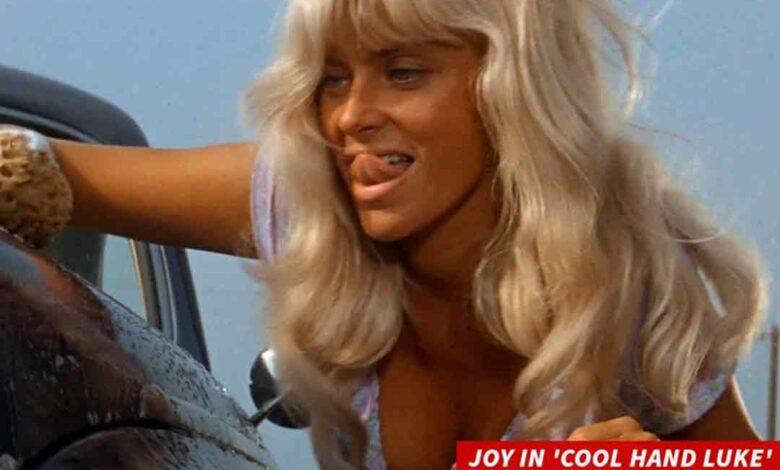
Joy Harmon Dies at 87: Hollywood Remembers ‘Cool Hand Luke’ Star
Veteran actress Joy Harmon, best known for her unforgettable role in the 1967 film Cool Hand Luke, has passed away at the age of 87. According to reports, she died at her Los Angeles-area home surrounded by family after battling pneumonia for several weeks.
Cause of Death
Harmon had reportedly been ill with pneumonia and underwent hospitalization followed by rehabilitation before spending her final days in hospice care. Her family shared that she “fought until the end” and had hoped to recover and return to work.
A Career Defined by an Iconic Scene
Joy Harmon became a cultural icon thanks to her brief but unforgettable appearance in Cool Hand Luke. In the film, she played Lucille—the woman in the famous car wash scene that captivated audiences and became one of the most memorable moments in classic Hollywood cinema.
Despite the short screen time, the role cemented her place in film history and made her widely recognizable.
Early Life and Rise to Fame
Born in New York in 1940, Harmon began her career as a model and beauty pageant contestant before transitioning into acting. She gained early exposure through television appearances and Broadway performances, eventually landing roles in films and popular TV shows of the 1960s.
She appeared in movies like Village of the Giants and Angel in My Pocket, along with TV shows such as Batman and Bewitched.
Life After Hollywood
After stepping away from acting, Harmon focused on her family and later pursued her passion for baking. She founded Aunt Joy’s Cakes, a bakery in Burbank, California, which became a local favorite.
Remarkably, she continued working at the bakery until shortly before her hospitalization, showing her dedication and love for her craft.
Family and Legacy
Joy Harmon is survived by her three children and several grandchildren. She is remembered not only for her contribution to cinema but also for her warmth, kindness, and creative spirit.
Her legacy lives on through one of Hollywood’s most iconic scenes and a life that successfully transitioned from film stardom to entrepreneurship.
The passing of Joy Harmon marks the end of an era for classic Hollywood fans. While her role in Cool Hand Luke lasted only minutes, its impact has endured for decades—making her a timeless figure in film history.
The passing of Joy Harmon marks the end of an era for classic Hollywood fans. While her role in Cool Hand Luke lasted only minutes, its impact has endured for decades—making her a timeless figure in film history.