
Trump Administration Moves to Dismantle Key Ocean Monitoring Network, Raising Global Climate Concerns
The Trump administration has announced plans to dismantle the Ocean Observatories Initiative, a major ocean-floor monitoring network that provides critical climate and marine ecosystem data. Scientists warn the decision could have lasting impacts on climate research and disaster preparedness.

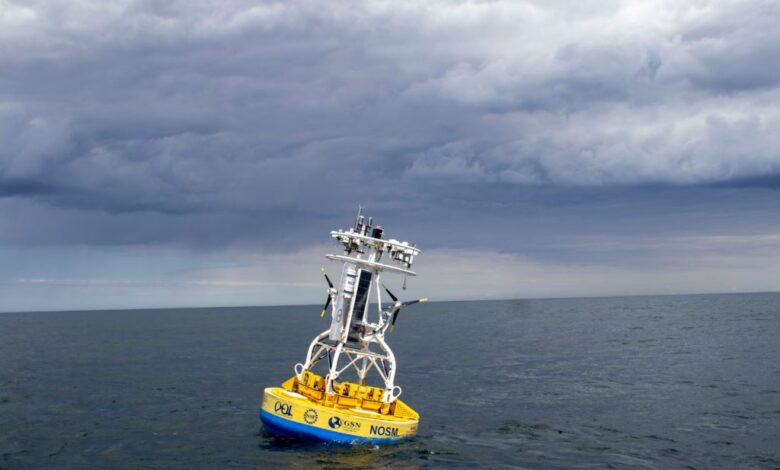
Trump Administration Begins Shutdown of Major Ocean Observation System
A major U.S. ocean monitoring network that has played a crucial role in climate and marine research for nearly a decade is being dismantled, sparking concern among scientists around the world. The decision affects the Ocean Observatories Initiative (OOI), a large-scale network of more than 900 deep-sea instruments designed to continuously monitor ocean conditions and provide real-time environmental data.
The system, which cost approximately $368–386 million to establish, has been collecting information from strategic locations across the Atlantic and Pacific Oceans since 2016. Researchers use the data to study climate change, ocean currents, marine ecosystems, greenhouse gas absorption, and coastal flooding risks.
What Is the Ocean Observatories Initiative?
The Ocean Observatories Initiative was developed with funding from the U.S. National Science Foundation (NSF) and involved partnerships with leading research institutions. The network consists of underwater sensors, moorings, robotic vehicles, and communication systems that continuously send data back to scientists on shore.
Unlike traditional ocean research missions that rely on periodic expeditions, the OOI provides year-round monitoring of ocean conditions. This continuous stream of information has helped researchers better understand:
- Ocean warming trends
- Marine heat waves
- Carbon dioxide absorption by oceans
- Changes in marine ecosystems
- Coastal flooding risks
- Major ocean circulation systems such as the Atlantic Meridional Overturning Current (AMOC)
Scientists have often described the network as one of the most advanced ocean-observation systems ever created.
Instruments Scheduled for Removal
According to reports, the NSF has initiated a process to scale back or “descope” the project. Beginning in June, ships will start removing ocean-monitoring equipment from several key locations, including:
- Oregon coast
- Washington State waters
- Alaska region
- North Carolina coastal areas
- The Irminger Sea between Greenland and Iceland
Most of the network’s active monitoring infrastructure is expected to be removed by 2027. Only limited components may remain operational.
Why Scientists Are Concerned
Climate researchers argue that shutting down the network could create significant gaps in long-term ocean records that are essential for understanding climate change.
Many scientific studies rely on continuous observations collected over decades. Interrupting these records makes it harder to identify long-term environmental trends and accurately predict future climate conditions. Experts say the loss of the OOI could weaken global efforts to monitor:
- Rising ocean temperatures
- Sea-level changes
- Marine biodiversity shifts
- Extreme weather development
- El Niño and La Niña events
- Ocean circulation patterns
Researchers have also warned that replacing the system in the future would be difficult and costly because of the specialized technology and expertise required to operate it.
Budget Cuts and Policy Changes
The dismantling comes amid broader federal budget reductions affecting scientific research programs. The Trump administration’s proposed budget included significant cuts to science funding, including reductions for agencies involved in environmental and climate research.
The National Science Foundation has stated that the decision is part of a broader strategy to manage research infrastructure and focus resources on evolving scientific priorities. Critics, however, argue that the move sacrifices valuable long-term data collection in exchange for relatively modest savings.
Impact on Climate Forecasting and Public Safety
Scientists stress that ocean monitoring is not only important for climate research but also for public safety and economic planning.
Data collected by the OOI contributes to:
- Weather forecasting
- Storm prediction
- Fisheries management
- Coastal flood monitoring
- Marine conservation efforts
Some experts have warned that reducing ocean observations could make forecasting less accurate and limit the ability of governments and communities to prepare for climate-related disasters.
International Response
While the United States is reducing support for parts of its ocean-monitoring infrastructure, other regions are moving in the opposite direction. The European Union recently announced new investments in ocean observation technology through initiatives aimed at expanding climate and marine monitoring capabilities.
This contrast has fueled concerns that the U.S. could lose its leadership position in ocean science and climate research. Several researchers have described the decision as a setback for international scientific collaboration and environmental monitoring efforts.
The planned dismantling of the Ocean Observatories Initiative marks one of the most significant changes to U.S. ocean research infrastructure in recent years. Supporters of the move argue it reflects shifting budget priorities, while critics warn it risks losing irreplaceable climate and ocean data collected over the last decade.
As instruments begin to be removed from key monitoring sites, scientists around the world will be watching closely to assess the long-term consequences for climate science, disaster preparedness, and the future of ocean research.-