
Brian Fitzpatrick Reveals GOP Divisions and Moderation Challenges
Brian Fitzpatrick highlights GOP divisions, FISA debate, and challenges faced by moderates in a polarized political landscape.

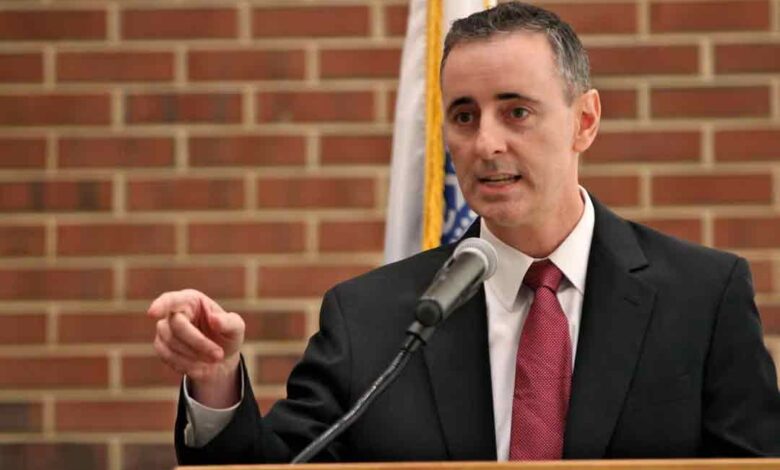
Brian Fitzpatrick Highlights GOP Divisions, Moderation Challenges and National Security Debate
Republican Congressman Brian Fitzpatrick has once again brought attention to the growing ideological divide within the Republican Party, offering a candid perspective on the challenges of being a moderate in today’s political environment. Speaking during Fly Out Day hosted by Punchbowl News, Fitzpatrick addressed key issues including party unity, national security legislation, and the future direction of the GOP.
GOP Divisions Becoming More Visible
One of the most important takeaways from Fitzpatrick’s discussion is the increasing fragmentation within the Republican Party. As a centrist Republican, he acknowledged that ideological differences between conservative hardliners and moderates are becoming harder to reconcile.
Fitzpatrick emphasized that the GOP is no longer a monolithic entity. Instead, it is evolving into a coalition of different factions, each with its own priorities. While some lawmakers push for aggressive conservative policies, others like Fitzpatrick advocate for bipartisan cooperation and pragmatic governance.
This division has had a significant impact on legislative processes in Washington. According to Fitzpatrick, internal disagreements often slow down decision-making and make it difficult for Republicans to present a unified front on critical issues.
The Challenge of Being a Moderate Republican
Fitzpatrick openly discussed the difficulties of maintaining a moderate stance in a political climate that increasingly rewards ideological extremes. He pointed out that lawmakers who seek compromise are sometimes criticized by both sides—conservatives view them as insufficiently loyal, while Democrats may remain skeptical of their intentions.
Interestingly, Fitzpatrick revealed that if the electoral system allowed it, he would consider becoming an independent candidate. He noted that Pennsylvania’s closed primary system limits such possibilities, effectively forcing candidates to align with a major party.
This statement highlights a broader issue in American politics: the structural barriers that discourage independent or centrist candidates, even when there is public demand for more balanced representation.
National Security and FISA Debate
Another key topic discussed during the interview was national security, particularly the ongoing debate surrounding the Foreign Intelligence Surveillance Act (FISA). Fitzpatrick, who has experience as a former FBI agent and serves on intelligence-related committees, stressed the importance of maintaining strong surveillance capabilities while also ensuring accountability and civil liberties.
He argued that national security should remain a bipartisan priority and warned against politicizing intelligence matters. According to Fitzpatrick, effective oversight and transparency are essential to maintaining public trust while protecting the country from evolving threats.
The FISA debate has become a focal point in Congress, with lawmakers divided over how to balance privacy concerns with security needs. Fitzpatrick’s position reflects a middle-ground approach—supporting the renewal of surveillance tools but with necessary reforms.
Bipartisanship in a Polarized Era
Throughout the conversation, Fitzpatrick repeatedly underscored the importance of bipartisanship. He believes that meaningful progress on major issues—whether economic policy, foreign relations, or national security—requires cooperation across party lines.
However, he also acknowledged that achieving bipartisan consensus is becoming increasingly difficult in a polarized political landscape. Social media, partisan media outlets, and primary election pressures have all contributed to a more divided Congress.
Despite these challenges, Fitzpatrick remains optimistic about the possibility of collaboration. He pointed to specific instances where lawmakers from both parties have worked together successfully, suggesting that common ground is still achievable.
What This Means for the Future of the GOP
Fitzpatrick’s remarks offer a glimpse into the future of the Republican Party. As internal divisions deepen, the GOP may face critical decisions about its identity and direction. Will it move further toward ideological purity, or will it embrace a broader coalition that includes moderates and independents?
The answer to this question could have significant implications not only for the party itself but also for the overall functioning of American democracy.
Brian Fitzpatrick’s candid insights shed light on the complex dynamics shaping today’s Republican Party. From internal divisions and the challenges of moderation to national security debates and the need for bipartisanship, his perspective reflects the broader tensions within U.S. politics.
As the GOP navigates these challenges, voices like Fitzpatrick’s may play a crucial role in bridging divides and promoting a more balanced approach to governance. Whether the party chooses to follow that path remains to be seen, but one thing is clear: the conversation about its future is far from over.