

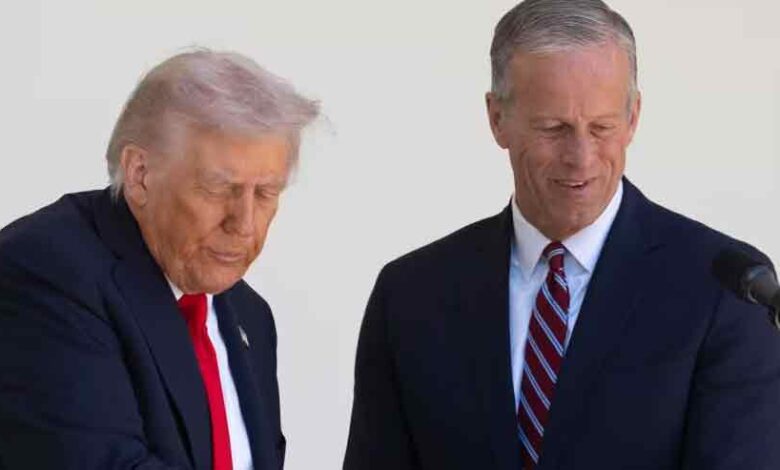
Trump Demands Action on SAVE Act Voting Bill

Former U.S. President Donald Trump is intensifying pressure on Republicans to pass the controversial SAVE (Safeguard American Voter Eligibility) Act, a voting reform bill that mandates proof of U.S. citizenship.
Trump has made it clear that he may refuse to sign any other legislation until the bill is approved, making it a top political priority ahead of upcoming elections.
What Is the SAVE Act?
The SAVE America Act aims to tighten election security by introducing stricter voter verification rules.
Key Provisions:
-
Mandatory proof of U.S. citizenship (passport or birth certificate) to register
-
Photo ID requirement for voting
-
Restrictions on mail-in voting
-
Data sharing between states and federal agencies for voter verification
Supporters argue the bill will prevent voter fraud, while critics warn it could limit access to voting for millions of eligible citizens.
Senate Filibuster: The Biggest Roadblock
Despite passing the House, the bill faces serious challenges in the Senate due to the filibuster rule, which requires at least 60 votes for most legislation.
Senate Majority Leader John Thune has acknowledged that Republicans currently do not have enough votes to overcome Democratic opposition.
Some GOP lawmakers have suggested changing Senate rules or using a “talking filibuster,” but many Republicans are hesitant to take that step.
GOP Divisions and Political Tensions
Trump’s aggressive push has created internal divisions within the Republican Party:
-
Some Republicans support the bill but oppose changing filibuster rules
-
Others back Trump’s demand for faster action
-
Party leaders aim to use debate to energize voters before elections
At the same time, Democrats strongly oppose the legislation, calling it a potential voter suppression measure.
Critics Warn of Voter Disenfranchisement
Opponents argue that strict documentation requirements could:
-
Impact rural and low-income voters
-
Affect married women with name changes
-
Disadvantage citizens without passports
Experts note that millions of Americans may not have immediate access to required documents, raising concerns about reduced voter participation.
What Happens Next?
The SAVE Act is expected to face a difficult path in the Senate, with limited chances of passing unless significant political shifts occur.
However, the debate itself is likely to:
-
Shape the 2026 election narrative
-
Highlight divisions over election security vs. voter access
-
Keep Trump at the center of Republican policy strategy
Conclusion
The battle over the SAVE Act underscores a larger national debate about election integrity and voting rights. While Republicans push for stricter rules, Democrats warn of widespread disenfranchisement—making this one of the most contentious legislative fights in recent times.