
Daylight Saving Time 2026 – Start Date, Time Change & Facts
Daylight Saving Time 2026 begins on March 8 at 2 a.m. Learn why clocks move forward, how it affects sleep, and when DST will end this year.

When Does Daylight Saving Time Start in 2026?
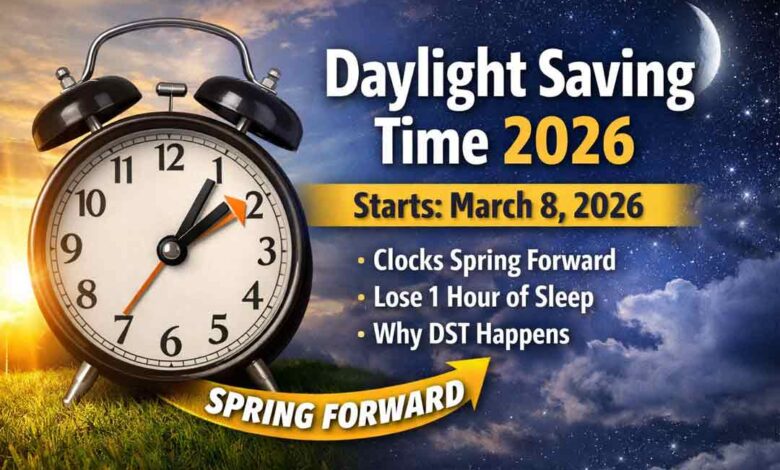
Daylight Saving Time (DST) in 2026 begins on Sunday, March 8 at 2:00 a.m. local time across most of the United States. At that moment, clocks move forward by one hour, meaning people lose one hour of sleep as the time jumps from 2:00 a.m. to 3:00 a.m..
The time change marks the beginning of longer evenings with more daylight after work or school.
What Happens When Clocks “Spring Forward”?
When DST begins, clocks shift ahead by one hour. This adjustment moves an hour of daylight from the morning to the evening.
For example:
-
Sunrise occurs later in the morning
-
Sunset occurs later in the evening
-
People experience shorter sleep on the night of the change
This seasonal adjustment is commonly remembered by the phrase “Spring forward, fall back.”
When Will Daylight Saving Time End in 2026?
Daylight Saving Time will remain active for most of the year and will end on Sunday, November 1, 2026, at 2:00 a.m., when clocks move back one hour to standard time.
At that time, people will gain an extra hour of sleep as the clock changes from 2:00 a.m. back to 1:00 a.m.
Why Do We Have Daylight Saving Time?
Daylight Saving Time was first introduced in the United States in 1918 during World War I to help conserve fuel and energy.
The idea was simple:
-
Use natural daylight more efficiently
-
Reduce energy consumption
-
Encourage outdoor activities during longer evenings
Later, the Uniform Time Act of 1966 standardized how DST is observed across the country.
Places That Do Not Observe Daylight Saving Time
Although most U.S. states follow DST, some areas do not participate. These include:
-
Hawaii
-
Most of Arizona
-
Puerto Rico
-
Guam
-
American Samoa
-
U.S. Virgin Islands
These regions remain on the same standard time all year.
Tips to Adjust to the Time Change
Many people feel tired after losing an hour of sleep. Experts recommend a few simple steps to adapt more easily:
-
Go to bed slightly earlier before the change
-
Get exposure to natural sunlight in the morning
-
Avoid heavy meals or caffeine late at night
-
Keep a consistent sleep schedule
These small adjustments can help your body adapt to the new time more smoothly.
Final Thoughts
Daylight Saving Time 2026 begins on March 8, bringing longer daylight hours in the evening but also a temporary loss of sleep. While the practice remains debated, it continues to be followed in most parts of the United States every year.
Understanding when clocks change and why DST exists can help people prepare for the seasonal shift and adjust their routines accordingly.