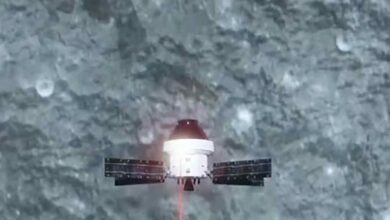
MIT Engineers Power NASA’s Historic Artemis II Moon Mission with Laser Communication Technology
MIT engineers power NASA’s Artemis II mission with advanced laser communication technology, enabling high-speed data transfer and 4K visuals from the Moon.


A groundbreaking collaboration between NASA and MIT Lincoln Laboratory is playing a key role in the success of the historic Artemis II mission. Engineers have developed an advanced laser-based communication system that is transforming how data is transmitted from space to Earth.
Revolutionary Laser Communication System
At the heart of the mission is the Orion Artemis II Optical Communications System (O2O)—a cutting-edge technology that uses laser beams instead of traditional radio signals.
- Sends high-resolution videos, images, and data from the Moon to Earth
- Offers faster and more efficient data transmission than radio frequency systems
- Enables clearer visuals and real-time communication from deep space
This optical system represents a major leap in space communication, addressing limitations of older radio-based systems, which are increasingly congested and slower over long distances.
MIT’s Role in Artemis II Mission
A dedicated team at MIT’s Lincoln Laboratory spent years developing this advanced communication system. Their innovation allows astronauts aboard the Orion spacecraft to transmit stunning visuals of both the Moon and Earth.
Engineers described the moment the system successfully activated in space as “inspiring” and “incredible,” marking a milestone in space technology.
Historic Artemis II Mission Overview
The Artemis II mission is a major step in humanity’s return to the Moon. Key highlights include:
- First crewed lunar mission in over 50 years
- Four astronauts traveling farther than any humans before
- Testing critical systems for future Moon landings and Mars missions
The mission is designed to validate technologies that will support long-term human presence beyond Earth.
Why Laser Communication Matters for Space Exploration
Laser communication is a game-changer for future missions:
- Higher bandwidth enables 4K video streaming from space
- Improved reliability for deep-space communication
- Supports future missions to the Moon, Mars, and beyond
This technology is expected to play a crucial role in upcoming Artemis missions and deep-space exploration initiatives.
The collaboration between NASA and MIT engineers marks a turning point in space communication. By successfully deploying laser-based technology on Artemis II, scientists have unlocked new possibilities for faster, clearer, and more efficient communication from space.
As humanity prepares for future lunar landings and Mars exploration, innovations like the O2O system will be essential in shaping the future of space travel.